Category Archives: adulting

Perspective
Sometimes, new experiences shed light on past experiences in ways that change how we understand them.
Sometimes, that helps you understand your own journey in ways you didn’t know you needed.
Ballet Trauma: It’s A Thing
As a ballet dancer, I began my career at The Lexington Ballet Company in Lexington, Kentucky.
I will always, always be grateful for the risk LexBallet took in picking me up out of their summer program. At the time, I didn’t have much history as a performer, and I was missing pretty significant chunks of the training that professional ballet dancers are expected to have when we begin our careers.
My first year was rocky, and the source of that rockiness (bullying by a senior company member) wasn’t handled well — but that doesn’t change the fact that, in my time with LexBallet, I learned so much as a dancer that would’ve been difficult to learn if I wasn’t dancing thirty hours per week. I learned how to function in a ballet company, I gained invaluable performing experience, and I eventually began building friendships that remain with me to this day (including AK, who I ran into again at NEBT because the ballet world is terrifyingly small).
I had some great mentors there, and very solid examples both of how to be a sound member of community that is a professional ballet company and, perhaps just as importantly, how not to be.
This isn’t to say that everything was perfect.
It wasn’t. Ballet has historically been sort of infamously problematic, and LexBallet didn’t entirely escape that legacy.
There were problems. Some of them were pretty significant. Some of them were worse than I realized at the time, not least because male ballet dancers are considered magical unicorns that might bolt at any moment and tend to be handled with much greater discretion than are female ballet dancers. Some didn’t fully come to a head until after I had moved away.
When I was there, I often said of LexBallet, “We’re a family — a dysfunctional family, but still a family.”
I still think that’s a pretty apt description: members of dysfunctional families often care deeply about each-other, and they can accomplish amazing things together, but they also share common wounds. Likewise, people within dysfunctional families can care deeply about their fellow family members while still causing them very serious harm.
That said, things were more dysfunctional than I understood at the time (LexBallet is currently in the process of taking some major strides to address those things, by the way, and I think that’s really cool and amazing).
Some of this I just plain didn’t see (again, magical unicorn), and some of it I kind of saw, but didn’t see enough to understand what I was seeing, either because it was consistent with my prior experiences and therefore felt normal-but-not-good, or because I was only witness to parts of what was going on, so I couldn’t get beyond, “This thing I’m witnessing seems kind of wrong but I’m not sure why.”
There were, of course, also the traditional, established traumas of the Ballet Cinematic Universe: though it wasn’t said in so many words, there was still the sense that nobody’s body was right. Some of the artistic staff treated us less as fully-realized artists who were working very hard than as interchangeable Dance Production Units who were never functioning quite as specified. There was, to be honest, kind of a lot of yelling.
We company members sometimes discussed things amongst ourselves, but I don’t think any of us really believed we could do much about it, in no small part because I don’t think we really believed things could actually be different. Things were just as rocky for almost everyone else we knew at other companies.
It turns out, in fact, that there’s a lot of this in the Ballet Cinematic Universe. Is anyone surprised by this?
Not really.
The surprise, I think, is how many of us have felt like things at our own companies are fine, because they’re not as awful as whatever’s happening at some other company.
A Bit of Unpacking
The audience of this blog is basically Bunheads and a few people who’ve been reading my stuff for years, so this might go without saying, but: ballet people kind of live on a different planet. Ballet has its own, deeply-immersive, very powerful culture, and because dancers spend so much of their time immersed in the Ballet Cinematic Universe, we might as well be living in a different country than that in which our next-door neighbors live.
Moreover, the culture in question propagates itself through selection. While ballet is famous for selecting for a very narrow range of body types and excluding everybody else, those outside the artform may not realize that it also selects for a specific temperament — one that is conscientious, cooperative, and obedient.
Historically, ballet has been the most hierarchical of the streams of dance. Its traditions belong to a Europe that has pretty much ceased to exist in every other sphere, and among those traditions, writ large, are hierarchy and obedience.
Ballet students in traditional programs learn from the very beginning to obey those in charge of us. As children between six and eight years old, just beginning serious ballet classes, we’ve historically been expected to place our hands on the barre, close our mouths, and follow instructions.
Those who aren’t naturally inclined to do so tend, very quickly, to drop out of training.
Those of us who continue — even those of us who take a circuitous route out of and back into ballet, as I did — learn both implicitly and explicitly that we should be quiet in class and rehearsal, take instruction obediently, only ask questions for clarification, and accept criticism gladly and quietly.
We also learn that our bodies are instruments on which our teachers and choreographers and directors create art.
We learn that hierarchy is to be respected, even at great cost.
We also tend to learn to internalize responsibility: when things are difficult, we must be the problem; we must be doing something wrong.
We also learn that we are replaceable. That if we don’t like the way things work, there are a thousand other dancers waiting to take our place.
So while the average 21st-century American might find it difficult to understand why we’d put up with a lot of the conditions that are considered pretty normal within the professional ballet world, we have difficulty understanding that other conditions could exist. Most of us are very intelligent, so we can understand that they should, in a philosophical sense, be able to exist: it’s just hard to make the jump to imagining what that would be like.
Likewise, we can find it difficult to imagine that we can pursue those conditions while continuing to work within the artform to which we’ve dedicated our entire lives (see above with regard to believing that we are replaceable).
But Maybe?
I’ve just finished up my first month with New England Ballet Theatre, and it’s wild how different the vibe is than almost anywhere else I’ve worked, including places that weren’t within the Ballet Cinematic Universe.
A part of me is really kind of afraid to keep repeating it out loud, because somewhere deep in my soul I’m extremely superstitious, but NEBT is built different, and it’s built different by design.
I didn’t write much about my audition at NEBT, but the fact that I felt welcome and comfortable during the audition, rather than stressed out and frightened, should really have been my first clue. I assumed that was just because I was auditioning outside of the normal audition season, at the same time as a good friend — but, in retrospect, a lot of it had to do with how both Rachael, our AD, and the existing company members welcomed both T (my friend) and me.
Since then, I’ve been slowly realizing that NEBT feels like home because Rachael is making a concerted effort to build a different kind of company: one in which we dancers are not eternally-malfunctioning Dance Production Units, but in which we are people and artists first.
This, in turn, is helping me to see the scars I carry from earlier experiences. Sometimes that’s uncomfortable, but healing isn’t always comfortable.
Likewise, this isn’t to say that life at NEBT completely stress-free. Ballet, as an artform, is stressful: we live on this knife’s edge, on which we pursue a perfection that we know cannot be achieved, but for which we’re still willing to work our tuchases off.
But I think, maybe, I’m finally beginning to understand how good stress — that is, the kind that facilitates creativity and growth — looks and feels in a work environment.
What feels so unique is that our AD handles that stress in a very different way. I have literally never heard her raise her voice, and when we’re not getting it, she takes a beat to figure out why, instead of just assuming that A] we’re not listening and B] we’re, in the British sense, thick.
We screw up. That’s just part of being human.
But, because the culture of the company has been built with the knowledge that mistakes happen and don’t have to be the end of the world, when someone screws up, it doesn’t feel like the end of the world.
Like, seriously, the first time I was suppose to run my opening solo for The Red Shoes, my brain went blank like 30 seconds in, and rather than screaming at me when I said, “I swear I knew this a second ago!” Rachael said, “Don’t worry, I don’t remember it either right now!” and we laughed about it.
To clarify: Rachael didn’t laugh at me. I laughed because I felt safe, and she laughed with me, because to be honest it really was pretty funny (especially since the first 30 seconds were great). Then I went and glanced at my notes, got my head back together, and ran the piece again.
When an overhead press lift[1] didn’t come off the first or second or fifth time in a rehearsal for an upcoming piece, nobody yelled at me or stomped around looking like they couldn’t believe that any professional dancer could fail so abysmally. Instead, we kept going. Eventually, I got the lift to work during rehearsal. We’re still two weeks out from the show that piece is in, so my partners and I will spend time perfecting the lift itself so we’ll be able to do it reliably by curtain.
- Overhead press-based lifts are roughly 25% strength and 75% timing, so nailing one down with a new partner almost always takes a minute, in my experience.
What I’m Trying To Say Is…
There’s an immense power in being safe to fail; in knowing that not being perfect the first time (or even the fifth time) won’t lead to a tongue-lashing or worse.
There’s an immense power in being valued as a human being and as an artist.
Largely because of this, we’re managing to carry off successful shows in a timeframe that I would’ve thought impossible when I was dancing at LexBallet — and I’ve turned out to be a more useful dancer than I ever believed I would be.
Four weeks from raw concept to opening night is absolutely wild: even in rep, when you’re dusting off a ballet that everyone already knows, four weeks is a pretty short lead time.
We put The Red Shoes up in a month. The audiences loved it. We got good reviews. The parts I got to watch from the house in Dress and Tech looked great.
More importantly, we’re creating a company where people want to stay.
If things continue in this vein, I can very much imagine remaining with NEBT for the rest of my career.
NEBT looks a lot like what I imagine when I’m imagining the future I want for ballet. The rigor is there; the traditions are respected — but not at the expense of respect for the human beings who are, after all, both medium and artist.
Because we are safe to fail, we are safe to try.
For me, that feels revolutionary. I think a lot of us who’ve lived our lives within the Ballet Cinematic Universe would agree.
The other day, someone drew a diagram on our whiteboard representing the difference between how we imagine skill-building progress — a straight line rising like an arrow along the axis representing time — and how it really works — a jagged zigzag that wiggles crazily around, but with an overall upward trend.
This is, in and of itself, a powerful representation of Rachael’s philosophy. Failures and missteps are expected parts of the process. We are safe to fail, so we’re safe to learn. (We’re also safe to call in sick, to have bad days, and to give injuries time to heal.)
Right now, there are eighteen of us in the company, and we talk regularly about how healing an environment it is.
Part of that healing, sometimes, is recognizing the things that have been harmful, that maybe you didn’t entirely see before. Sometimes that’s difficult in its own way.
But healing is like that, and that’s okay.
I can’t adequately express how much it means to find this oasis; this island of healing. That isn’t to say I expect it to be perfect, of course — ballet companies are run by human beings, and human beings are imperfect — but the atmosphere of grace at NEBT means, I hope, that we’ll also feel safe to work on those things together, too.
For that and for so many reasons, I hope NEBT will succeed and continue to grow. And I hope I’ll be there to be part of it for a very long time.

Home
So: when last we checked in, D was sick, I was sleeping on the couch, I was stressing out about an audition email I’d just sent, and my cat was awaiting surgery for his insulinoma. Oh, and I was having trouble feeling like I was allowed to exist anywhere.
Since then:
My Cat Had Surgery (And He’s Doing Pretty Well)
When he was first diagnosed in the vet ER, it looked like the location of Merkah’s primary tumor might very likely make it inoperable. When his oncologist looked at the scans, though, she thought there was a shot, and the head of surgery agreed.
Flash forward (okay, crawl forward, because first I got sick at SI and then D got sick) to last Tuesday. Merkah went in for surgery and the surgical team was able to remove the two masses from his pancreas (it sounded like it was a challenge getting the main one, but the kind of challenge surgeons like).
While they were in there, they biopsied his liver and other areas of his pancreas just to check. The biopsies both came back with only benign changes.
Merkah came home on Friday with an e-tube for feeding, since he wasn’t into eating (cats are like that, and even though he thinks he’s a dog, Merkah is being a cat this time). He’s recovering fairly comfortably, although his medications make him pretty sleepy.

The surgeons think they got all of the insulinoma, and Merkah’s blood glucose has remained stable over the past week, so things are looking up for him.
At the end of the day, he’s 15 years old, which is definitely in Senior Citizen territory as cats go, but since housecats can live to be into their twenties, it seemed worth trying. My biggest concern was that he wouldn’t survive anaesthesia, but he came through that just fine.
If they survive surgery (which most do), the worst-case outcome for cats with insulinoma is simply that the insulinoma either proves too difficult to extract or comes back, and then you just go back to managing quality of life for as long as possible and/or trying chemotherapy.
Overall, though, in the sample of cats who’ve undergone surgical treatment for insulinoma, there’s been a pretty high rate of good outcomes, in which the surgery resolves the problem and the cats live for another two or more years (most cats who get insulinomas are older cats, so that often places them towards the end of their life expectancy).
We’ve got a follow-up coming up with some further x-rays and scans to check for any possibility of recurrence or metastases that weren’t yet visible earlier in treatment, so I’ll keep y’all posted.
It’s still early days, but things look hopeful for Mr Mu to be with us for a while longer. I know he won’t be around forever, but I’m glad to have a bit more time with him.
Everyone Recovered
D got better, and Mom managed to not catch COVID. It felt weird moving to the couch for like ten days, then equally weird moving back to the bedroom, but things are back to normal now, for values of normal, etc.
I Did The Audition
After much internal panic, I was invited to come take company class, observe rehearsal, and chat about things with the AD of the company where I was auditioning.
The tone of the email was overwhelmingly positive, so I went into the audition feeling confident and excited and…
I Got It!
This is huge for me.
This isn’t the first dance job I’ve auditioned for, but it is the first ballet audition I’ve done: I didn’t actually have to audition at LexBallet, because Mr D sort of just plucked me out of a summer program.
Moreover, I’m coming into this job as a full company member, which – NGL – feels amazing.
So as of this week I’m officially a Company Artist at New England Ballet Theatre.
My picture is on the website and everything! ^-^

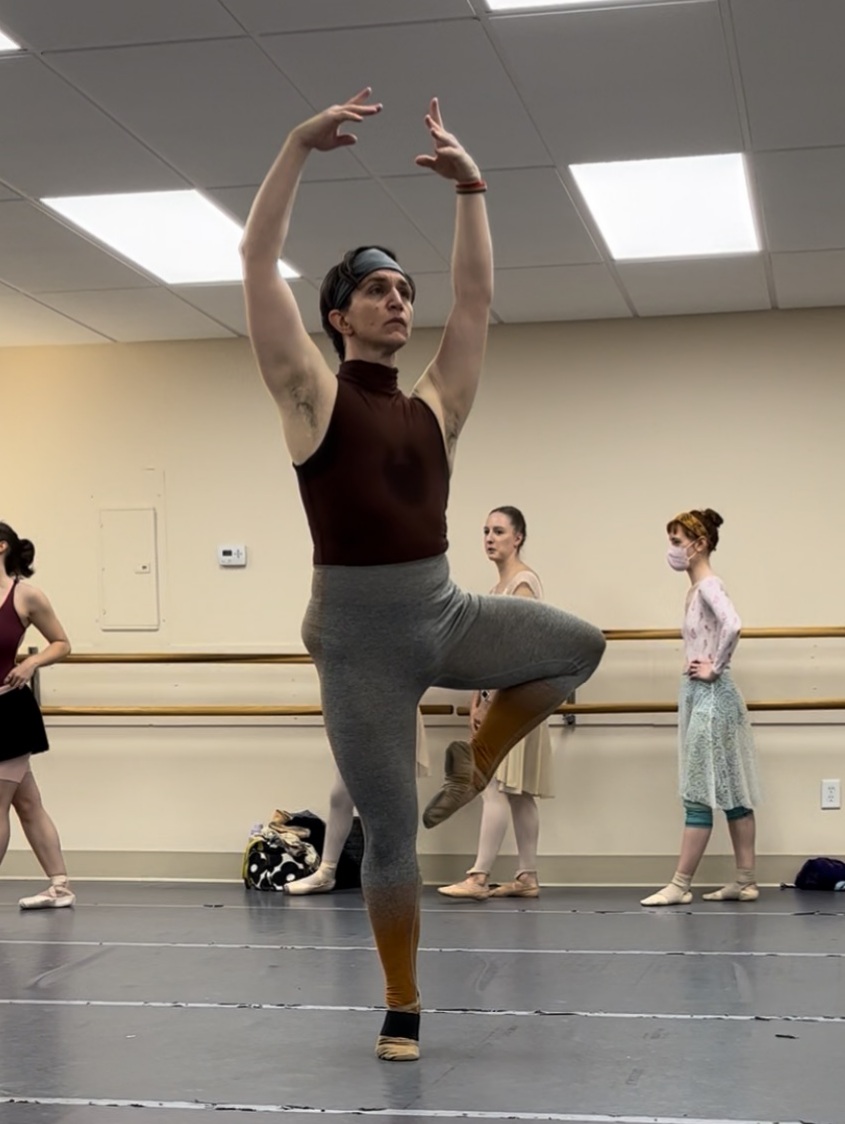
My first performance with NEBT will be in the role of The Shoemaker in The Red Shoes. Léonid Massine originated the rôle in the 1948 film, and I’m excited to be taking it on in my first outing with the company.
More importantly, though, is this: from the moment I walked in to take class on my audition day, I felt welcome and, in fact, at home in the studio.
Like LexBallet, NEBT is a small company with strong dancers and big dreams. Like SPDC, our AD is a woman with a strong creative vision.
She’s also the most chill AD I’ve ever met, which is great. The vibe of the company overall is lovely. I mentioned that on Tuesday as I was gathering my stuff to head home, and we had a longish chat about it.
If I hadn’t felt so strongly from the first that NEBT is a good place, our AD[•]’s efforts to make sure SPDC was treated equitably under the circumstances would have gone a long way to convince me. Yes, the dance world is small and you don’t want to make waves unnecessarily, but Ms R has been incredibly fair and flexible, and that means a lot.
- We’ll call her Ms R, since it feels weird to refer to a ballet company AD by their first name in writing; I’ll have to sort that bit out for myself later ^-^’
As someone who kind of fumbled his way into a ballet career, it means the world to feel like I’m a dancer that the company wanted, and not just one that the company settled for.
SPDC was the first place I felt like that, and I hope to continue my relationship with them as a teaching artist and an intermittent guest artist for the foreseeable future.
If it weren’t for the fact that commuting back and forth to NYC just isn’t going to work at this point in my life, I would gladly have remained a member of SPDC, but as things stand, I’m immensely grateful for the time I’ve had there, and also incredibly grateful to T for sending me NEBT’s audition notice and to NEBT for offering me a contract.
It’s nice to feel at home in the studio. It’s nice to feel like I belong and like I fit. It’s also remarkable how much it does for you to feel comfortable and safe in class: I’m still getting my legs back under me a bit, but I’m dancing better than I expected to during my first week back as a full-time ballet dancer.
It’s early days, but I think NEBT feels like somewhere I’d really like to stay and grow as an artist. I like the other dancers, I like Ms R, and I like the way Ms R thinks both in a creative capacity and in terms of how she’s running day-to-day company operations.
Yea Verily, The World Be Smöl
One of the best things to come out of this entire situation is that my friend and OG Nutcracker Grand Pas Sugarplum, AK, from LexBallet is dancing at NEBT, which I didn’t realize until after I auditioned.
She’s one of my all-time-favorite partners, so it’s good to be reunited with her.

My friend T is also joining the company, and it’s awesome to be coming in with two existing friends (both of whom are also neurospicy ^-^).
So that’s it for now. The past year has been a gigantic adventure, and I look forward to more adventures coming up.
For now, keep the rubber side/contact patch down (unless you’re doing contemporary choreography, in which case, roll with gusto and wear your bruises with pride)!
PS I will come back and add alt text to the pics, but I’m almost to my train station

Where I Am Right Now
Blargh.
First, it’s been a rough day.
D tested positive for Covid this morning. He’s doing fairly okay thus far (just regular mild flu-like generalized blargh), but it was a kick in the face neither of us really need, not to mention spectacularly bad timing.
Like, he literally just got back from Burning Man on Tuesday, we’re in the middle of possibly buying a house and also figuring out how to afford surgery for the cat at the same time, and it’s doing my head in. (These two events weren’t supposed to coincide. Life is clearly taking the piss, here.)
It’s pretty likely that D’s got the same variant I had a couple weeks ago, so I’m probably pretty safe (though we’re still taking precautions, of course), but, like, if I can be just a little coarse for a moment?
Fuck, man. Just fucking fuck.
We’re doing everything we can to minimize Mom’s exposure, because while she’s fully vaxxed and possibly the healthiest person on the entire planet, it’s hard on her not being able to go visit R in memory care, especially right now, since he had a couple of really rocky mornings recently. We’d like to keep the duration of this phase as short as possible.
Needless to say, D being sick means my plans for today (which included working in the studio with T, curriculum planning, and letting my brain decompress a little bit) went right out the window. Instead, I spent the entire day running up and down the stairs to bring D stuff and doing the laundry that D would’ve been doing if he wasn’t stuck in bed.
(Now I’m preparing to bed down on the couch, and being grateful that I’m 5’8″/173 cm, AKA The Perfect Height[1]: Just Tall Enough To Reach The Top Shelves, But Still Small Enough To Sleep Comfortably On A Standard Sofa. Thank G-d for moderately-sized favors.)
- I mean, Richmond Ballet disagrees, and thinks 5’10” or taller is the perfect height, but it’s not their couch I’m sleeping on, here. Besides, I think Richmond is too hot, so we wouldn’t get along anyway.
Yes, these are all first world problems, but that doesn’t mean they’re not actual problems.
None of it is especially awful, but the sum of it, all these little things hitting all at once … it’s like bird-shot. Each pellet may be small, but if you get caught by a spray of that stuff, it’s gonna mess up your day.
Also it’s been hecking my executive functioning difficulties right up, since there’s been a whole lot of shifting things around and starting and stopping and restarting tasks, etc, none of which plays well with the whole autism/ADHD combo.
This is, needless to say, not where I want to be with both my teaching year and my company’s season starting on this coming week (on MOnday and Tuesday, respectively).
Oh, and I’m also stressing out about an audition email I sent a few days back, though most of the time I’m successfully managing to avoid thinking about it[2].
- This is an under-rated coping mechanism[3]. Like, if thinking about something isn’t going to be useful, it’s fully okay to not think about it if thinking about it makes your life worse (or even if you just don’t want to think about it). This is also my approach to dealing with elections. Once I’ve voted, I pay absolutely no attention to what’s being reported about the results until things are final. Listening to the numbers prior to that just gives me anxiety, no matter what. The candidate I prefer could have a lead of a jillion points, and my brain will still give me hives if I listen to poll reporting, so feck it.
- Also, I realize it’s one that you can’t always use. Like, this works for me for some things, but not for others. I have no idea why. I can ignore the stream of election coverage after voting, but I often can’t ignore my brain’s efforts to convince me that my body is wrong in one way or another. So what I really mean is: it’s often okay to not think about things if and when you can. That doesn’t mean it’s always going to be possible (which is also okay; our minds are gonna mind, bc that’s just what they do), but that if you find a strategy to take a break from the anxiety of living, it’s okay to do so. And if you can’t do that: no shade. I cannot, for the life of me, train myself to not notice when the air vents in D’s car are pointing in infinitesimally different directions, which they ALWAYS are, and if anyone could hear my internal monologue about that particular sensory fiasco, they’d think I was off the rails. So I’m not here to judge anyone else’s mind, just offer permission to enjoy ignoring things when you get a chance.
In Which My Brain Is Mean To Me For Little Or No Reason
I’m also deeply unhappy with my body right now. I haven’t disliked my body this much in several years, and I suspect it comes down to lack of studio time and seeing video from, like, 2.5 weeks ago juxtaposed with video from 2020 and one from 2022, in one of which I was still somehow pretty much ballet-company fit and in the other of which I wasn’t far off that mark.
This remains the case even though I’m making slow-but-steady progress back towards being actually company fit. I can’t stand to look at myself on video right now, so I just … don’t. Except when I have to. And then it’s just … bad.
Again, a First World Problem — and, really, the First Worldiest of First World Problems, and I know that. But.
Like, I recognize that right now I still have a boatload of Conventionally Attractive Thin Privilege. I am that jackwagon that wishes this cool t-shirt came in an extra-small, ffs.
My body image issues come from a different, much more individual, place. They’re weird and complicated and very, very specific to my body, and it’s exhausting, not least because the number of people with whom I can actually talk about it is vanishingly small.
Like, people who don’t have the level of Thin Privilege that I do just don’t fucking need to hear it. They’ve got worse things on their plates than I do, and it’s up to me to show up for them.
Likewise, I can say a million times that, in fact, I think people across the entire size spectrum look great, unless those people are me, but if I, as a thin person, gripe about my body, it’s still going to be hurtful to people with less Thin Privilege, or no Thin Privilege, because that’s a sore place for so many people. (I’m explaining this badly, but I hope it’s kind of making sense?)
And a lot of the people who aren’t in that category, the people who might seem like the logical choice to talk to, just … don’t get it?
Like, I don’t need to hear, “Your body is fine!” or, “You have nothing to worry about!” I appreciate the effort, but, like, on a purely rational level, I kind of know that?
The problem isn’t a rational one. I can’t think my way out of it.
Also, I mean, don’t get me wrong: it’s nice to know other people don’t necessarily agree with me that my body is Just Wrong right now? It’s nice to know some people think my body looks good.
But ultimately my brain doesn’t actually care, because my brain is being a dick about this right now.
This problem is a deeply irrational one. So the people in my life who get it — mostly other dancers — mean so much to me. They fully grok how this isn’t about anyone else’s body: like, I can think of so many people who are much bigger than me who look great both dancing and the rest of the time.
It’s just about my body, and how it looks to me relative to some stupid internal My (And Only My) Body Should Look This Way (And Only This Way) model, and how some fecked-up part of my brain thinks choreography looks on me, and how that interferes with my confidence.
On An Unrelated Note … Maybe
I saw a really cool, beautiful, wonderful post on Insta today that made something gel for me.
I often say that I have trouble feeling like I fit in different spaces, but what I really mean, a lot of the time, is that I have difficulty feeling like I’m even allowed to be in places.
Even as a kid, I had a really weird aversion to being seen.
Like, literally.
When I was seven, we had a bouncy horse in the backyard. I was riding my bouncy horse all alone when a neighbor whose back yard abutted our fence happened to wave. I had this awful feeling like he was going to shout at me me that I shouldn’t be riding my bouncy horse there, even though feeling that way was completely irrational. Like, I was in my own back yard.
Just, like: I was visible?
WTF.
Being made aware by my peers that I was deeply unwelcome at school — that they, at least, didn’t think I should be there — only reinforced that feeling.
So this wonderful insta post was about a librarian taking time to make sure someone felt welcome, and finding out that the other library people they work with also take time to make that person feel welcome, and safe, and allowed to be in the library.
And I realized, belatedly, that that’s part of what I’ve missed so much about my life at LexBallet. I may or may not have been the worst dancer in the company on any given day, but after the first year, I never felt like I was being Included Because Teacher Said So or whatever.
I felt like I belonged and was allowed to be there. I felt like I was part of the place, like everyone else in the company. I felt like I could stay late and work on stuff and that was okay. I was there and I was home.
It’s what I miss about Louisville Ballet’s school. I belonged there. I was at home. I wasn’t an interloper.
I’ve come to feel that way where I teach now, which is a start.
But, having first come to this realization — that I often feel like I’m not actually allowed to be somewhere, when in fact there’s no evidence whatsoever to suggest that — earlier this year, I’m just beginning to see how very extensively it interferes with my life.
Like, I don’t go for walks much because part of me is legitimately afraid someone will notice that I’m here (here! Where I have lived more of my life than anywhere else, for goodness’ sake!) and tell me I’m not supposed to be here.
Which is just, like. What????? Where does this even start? How did it begin? How do I unravel it? (I know; I know. One thread at a time. Start where you are.)
My therapist, who is absolutely amazing, is currently in the midst of transitioning to a new practice, but when I do get to start seeing him again, this is definitely going right on the agenda.
Like, I definitely have thoughts about where it might have started, but I’m not sure how to start, like, fixing it.
Anyway.
So that’s where things stand. Or, like, lie stretched out on the sofa, which is just long enough to be comfortable.
Here I am at the beginning of a new season, at the beginning of a new school year.
Things are a little wild. I just need to remember that this is just, like, for now.
Like the classic weather joke: conditions will remain the same until something changes (or however that’s supposed to go).
Anyway, here we go, into the future. I mean: we’re always going there anyway, but as humans we like categories and stuff, so we organize time with arbitrary markers, or whatever.

Quickie
I’ve been thinking a lot about this contract that I landed, and about the (overwhelmingly positive) language my new AD used when she called me up to make the offer.
I’ve been thinking about it because I walked into my last contract as a trainee—basically with the knowledge that I was the dancer in the company with the least experience and that I had the most to catch up on in terms of technique and skills.
In some ways, that was great! It meant I felt safe in the knowledge that I had a lot to learn and was gonna struggle sometimes, and overall being able to think about it that way helped me stay a little calmer about things when I did struggle.
However, I’m now doing this thing where I’m walking on in kind of the opposite position—a full company member beginning the season with a pretty big role in a pretty important show.
And it’s made me re-evaluate my feelings about myself as a dancer.
Like, at first, I was like, Holy heck, what if I’m not really as good as SP thinks I am?
And then I thought: No. She’s seen me in ballet class; she’s seen me in company class already [1]. Also, she’s been doing this for THIRTY YEARS. I’m guessing she knows what she’s about.
- Once again, y’all: if you can ever take company class a time or two before you audition somewhere, DO IT! Also, should I ever actually get Antiphon off the ground, I think I’m going to do open company class for exactly this reason
And thinking that, knowing that I’ve been given a pretty intense brief, I’m like, Okay, in going to try to see myself as the dancer she sees.
And although giving myself the grace of being a trainee helped in the beginning of my career, I wonder if it didn’t also hold me back. There were definitely times that I felt like, Oh, I shouldn’t ask for x or y, or try this or that; I’m just a trainee.
Admittedly, some of this came down to the culture of the specific company: it was very traditional, and thus very top-down. In many ways, that was good for me, but it definitely made me more hesitant to speak up.
Anyway, that mindset stuck and even after I started to realize I was seriously growing as a dancer. I think maybe D is right and I under-valued my own ability and value as a dancer, possibly by quite a bit.
So now I’ve got this new role in my life as a dancer to step into. And that’s really cool, and really challenging, and it’s forcing me to regularly say to myself, No. You’ve got this. Stop thinking of yourself as “not really that good” and work on being the dancer SP saw in the audition
So there it is.
I guess this is a normal thing that happens when you make a big step forward in your career? But I never thought about it because honestly I never imagined having a career until I stumbled into my professional dance career.
I never imagined being able to do anything long enough to get promoted, really (even though I’d actually been promoted in two jobs by then; neither were jobs I could imagine doing for a decade or longer).
Anyway, here we are.
Oh, one last thing: our first show is in the first theater where I ever saw ballet. So this is really like coming full circle and coming home, and I am HERE FOR IT.

On Autism And Ballet (Again)
I know I’ve written about this before, and I’m sure I’ll write about it again, but because for some unfathomable reason I’ve spent basically my entire day on Twitter grooving on threads from the neurodivergent, EDS, and disability communities, it occurs to me to write about why the ballet is a good fit for me, specifically as it interfaces with autism.
Everyone on earth has now written a summary of the basic diagnostic criteria for autism, so I’m not going to do that, here. Y’all know how to Google if you need more info -.^
Instead, I’m going to touch on how working as a dancer in a ballet company is a good fit for me as an autistic person, breaking things down as I go by the specific traits in question.
So, here we go.
Narrow Range Of Specialized Interests
Hooooo, boy. With the exception of the equestrian world and certain subsets of academia (I see you, paleobiologists!), I’m not sure there are too many actual career paths that dovetail as neatly here.
Ballet is an all-encompassing special interest. It requires your body, your mind, and basically all of your time. It’s one of the very few career paths in which obsessive focus on the subject is essentially an entry-level requirement—like, the only way to make it through the training is to be motivated enough by ballet itself, which is why dancers everywhere giggle at t-shirts that read, “I CAN’T. I HAVE CLASS.”

Like, we’ve all been there, and (excepting the few who get shoved into it by overbearing parents), we all chose that life.
As autistics, we experience this thing where people get really sick of our special interests. I honestly have only met one person in the ballet world who occasionally gets tired of talking about ballet, and even he doesn’t get tried enough of it to resent it—he’s just delighted when people bring their non-dancing partners to dancer shindigs so he can talk to them about, like, politics or futböl ^-^
It’s not that we dancers never talk about anything else—but in the studio after rehearsal, or at gatherings of dancers, nobody gets mad if you talk about ballet, or if all your jokes are specific to dance.
I suppose part of this is that ballet leaves precious little time for other pursuits—but, also, you only get that far if it basically consumes your whole being.
Rigid Adherence To Routine
I go to class even when I’m on holiday.
This is, of course, partly because I like going to class, and partly because the only way to stay in shape for ballet is, well, ballet.
But I’ve realized it’s also, to a significant extent, because no matter where I go, class is class. Barre is barre. Centre is centre. Allegro is the best thing that ever—erm, sorry, allegro is allegro.
There may be minor variations (Ha! Ballet puns!) in the routine, but overall, when I step into the studio, I can relax a bit more than I normally do, because I understand the process, and I know what will happen.

That Whole “Systematizing” Thing
NGL, I love a good system—and ballet is a system.

It comes with its own entire language and four hundred years of etiquette, which (bonus!) is largely explicit.
Better still, it combines beautifully with a systematic understanding of anatomy and physiology.
Yes, parts of the system are problematic and due for overhaul—but that can happen in any system. A strong system will weather those changes and come out the other side better than it was.
Ballet has been doing that for four hundred years. As long as we allow it to, it will continue.
Being a member of a company also provides a systematic framework for managing time. Class begins at the same time six days a week; rehearsal and performance schedules are posted where you can see them enter day, but you’ve also got your fellow dancers to remind you that, oh yeah, this Friday we have an outreach gig after lunch.
In a well-organized company, you know the temporal framework for the entire season when you arrive on Day One. Specific parts of it may change due to casting or whatever (for example, global pandemics o.O), but the broad strokes are there.
The Social Aspect
My particular autism is probably most observable in the casual social contexts most NT folks seem to really enjoy—the ones where there’s no specific topic or activity, just general chumming around with a bunch of people. I have literally no idea what to do in those circumstances unless someone fires up a conversation that falls in my range of Known Topics ^.^’
And G-d help me if it’s the kind of party where there’s music and lots of different, overlapping conversations but no room to just dance [1]. I can’t with parties like that—my spoken language processing is too limited, and my brain stops bothering, so I typically find the quietest possible place to hole up with a match-3 game on my phone.
- If there’s room to dance, on the other hand, I’m in my element. It didn’t even really matter what kind of music is playing.
There’s some very interesting research happening about much of autistic social difficulty results directly to autistic neurodivergce itself and how much results from the social opportunity costs of being different, particularly during childhood, bu it’s generally agreed that autistics on the whole typically struggle with social stuff.

Ballet might seem like a weird way to address that, since the typical class offers little or no time for what we think of as socializing. But what it lacks in time to chat, it makes up for in spades under the heading of “shared/corporate[2]/communal experience”—which works well for me as someone who grooves on the whole “parallel play” modality, and which in itself provides fodder for chats outside of class and rehearsal (or during breaks).
- In the sense of “people doing things together as a single entity”—ie, a body, or corpus
You don’t have to know how to have a casual conversation to be part of a group of dancers—but being part of a group of dancers can help you get better at having a casual conversation. At least, it did that for me. I’m not going to say I ever totally stopped being The Weird Kid at LexBallet, but people got to know and like me well enough to see past the discomfort that causes.
Addendum: Oh, and because I totally failed to mention it: there’s nothing as social as partnering. (Well, maybe one other thing ^-^’)
You Never Have To Sit Still
Okay, except sometimes, like if you’re a corps girl in parts of Swan Lake or the Master of Ceremonies during certain parts of The Sleeping Beauty. But, even then, it’s a very active way of being still, and will inevitably be relieved by movement.
I often tell people the story of sitting (“sitting,” lol) in a meeting at the last non-ballet job I had and experiencing this intense revelation: like, literally everyone else in the room was physically able to sit still.
I was the only one doing a jig under the table, furiously taking notes to stay engaged, drawing when there was a lull, and constantly shifting in my chair.
That was the moment when I realized with absolute clarity that I did not belong there. Not in a value-judging way—just in a, “Wow, this is not my environment” way. I realized I wasn’t about to “grow into” sitting down at a desk—not then, and probably not ever.

I need to move in order to function. I mean, yes, that’s true for everyone, don’t get me wrong—basically it’s what makes us not plants. Even sessile species like sea anemones go through phases where the they float around irresponsibly before finding grown-up jobs and settling down.
What I mean is that, for whatever reason, my brain/body compels me to move more than most people are compelled to move.
I think better when I’m moving. I feel better when I’m moving. Moving helps me organize my senses and my thoughts.
Honestly, my brain is kind of like one of those sharks that starts to die if it stops swimming, only replace “die” with “dance a stationary jig while quietly losing the plot, but not actually processing information in any meaningful way.”
I don’t necessarily panic—I just get more and more restless, and the excess spills over in the form of more meltdowns and less sleep. Well, and also just having to get up and take a walk, to anywhere, even if it’s just the despised printer, enemy of humankind, or the file cabinet or whatevs.
Also, I just have a metric shedload of extra energy to burn off, and nothing does that like ballet-company life [3]. Teaching gets partway there, but drains my social meter harder than it does my hyperactivity, so it doesn’t lead to the kind of productive exhaustion that makes me actually feel my best and reliably sleep well.
- working with horses also comes very close, but it’s hard to work at a barn and in a ballet company at the same time; being a picker in a gigantic warehouse also burns off tons of energy, but isn’t as helpful in other ways
This is never a problem in ballet, because in ballet, moving is literally your job.
So, Like, In Summary
Anyway, this is long enough.
I’ve written it in part because I’m sure there are people out there who are like, “Wait, I thought all autistics did computers or trains or math,” or even, “How can an autistic person possibly work in ballet?”
I hope this goes a little way towards helping things make sense for people in those camps, but it also helps me understand better what I need from my work environment and why company life, even during my “unpaid trainee/bottom of the pile” days, meant so much to me and worked so well for me.
I’ve been thinking hard about how to make things work going forward, because normally, in dance, you kind of audition everywhere and you go where the job is, but things are happening in my life (nothing ominous, just … responsibilities and stuff) that mean I’ll be moving to a specific place whether or not I get a company spot there.
That has been pretty scary, because I haven’t been sure how to continue building my life as a dancer if that happens. Like, literally, as a not-tall guy who still has some rough spots in his training, that’s a very real possibility. There might not be a company that has a spot for me right now.
But knowing why company life works for me will help me begin to see my way to building a working life that does work, even if that happens.
Rough Day, But Not As Rough
CW: Mention of Suicidal Thoughts
Today was … yeah.
It wasn’t the worst day I’ve ever had. Not by a long, long, loooooooong measure.
But it was the kind of day that starts with a reminder of the fact that the ballet company I worked my butt off to be worthy of is still on hiatus, and that since I’m moving, it’s very unlikely I’ll be dancing with them much, if at all, ever again, and that as such the part of my career that meant the most to me is still stalled (pending auditions, etc). This is, for me, a big deal.
I’m also tried and probably haven’t eaten enough bc my schedule is weird and nothing sounds like food, so I’m sure some of this is just down to the fact that I turn into a giant toddler when I’m hungry or tired, let alone both.
So, anyway, right now, my brain is simultaneously like YOU ARE AWFUL, LIFE IS AWFUL, EVERYTHING IS AWFUL and also like OMFG STOP BEING SUCH A GIANT DRAMATIC EMO TODDLER (while yet another part is like Can’t we just stop being so judgmental of our own emotions, here? Sheesh).
But, also, another part of my brain is like, “Dude, you know what? I remember that we’ve felt like this before, and it was terrible and sucked and felt like it would go on forever, but then eventually we stopped feeling like this. So, I’ma let you finish, but you know, it’s very possible that eventually this will stop, too.”
It reminds me of a thing I realized about my suicidal episodes, which come on very fast, usually when I find myself feeling trapped: I can tell myself to wait a day (or an hour, or thirty seconds), and if nothing has changed, I can kill myself then. I tell myself that over and over, until finally I stop having to tell myself that. Sometimes it takes weeks. Sometimes it takes less than a day.
But so far I’m still alive, partly because I really mean it in those moments. Like, I tell myself that option is there, and bizarrely, that helps me feel a tiny bit less trapped. That probably wouldn’t work for everyone, but it often works for me (in combination with having people in my life who can help me, of course).
Anyway, I think this is the first time my brain has chimed in with NOOOOOO EVERYTHING IS HORRIBLE AND IT WILL BE HORRIBLE FOREVER and another part of my brain has said, “Hey, you know, that could be true, but experience tells me it probably isn’t[1], so instead of getting caught in this idea–though you can go on feeling that way, over there, it’s okay–I’m going to hang out and wait and see,” and I’ve been able to sit with that paradox without it losing sight of that second thing, really.
- I mean, notwithstanding the fact that in some ways life is unrelentingly horrible to a lot of people. Like, for an incredibly large number of people, that is pretty objectively true, though so many of those people are incredible at enduring things nobody should have to endure. But that’s a different sense of the thing.
I am still struggling with being knocked out of the thing that was so central in my life, and not having somehow gotten my crap together enough to audition last year so I wouldn’t be in this position now (though I’d still be moving, so I’d still be facing the terrifying gamut of auditions). The structure of company life brought a lot of sanity with it, for me; it helped shape my time in ways I’m not good at doing for myself (I don’t mean that as a value judgment: it’s just not a thing my brain does well, and that’s fine). It helped me grow both as a dancer and as a person in ways that I’m not doing, or perhaps not doing as much, under current circumstances (I’m sure I’m learning other things, but the thing you have doesn’t replace the thing you lost; that’s just how grief is).
It’s been hard to talk about this because, quite frankly, the response one often gets is, “Why are you complaining! You have no idea how lucky you are to have had the time that you did in that company.”
Which is both dismissive (grief is not lessened by knowing that one has lost something rare and special; not at all) and, frankly, incorrect. I would hazard that I know better than anyone alive the staggering constellation of circumstances that coincided to give me my time at LexBallet: I know keenly and viscerally just how incredibly lucky I am.
But I also know that luck was only part of it, and that an ocean of hard work and no small measure of sacrifice was also involved.
Grief is real; grief is hard; and still I work not to cling to grief, but to say, “Hello, grief,” and let it be there, while also knowing that other things will come, though I have no idea what they will be, and they might not be the things I imagine that I want.
So here I am, sitting with these things that I feel, and sitting with the uncertainty of things, and part of me is in turmoil about it (though probably more in turmoil about needing to go to bed and/or eat) and part of me is at peace with that turmoil. Which feels kind of neat, in its own way.
And now I’m going to go feed my inner giant emo toddler and go to bed.
~
PS: the thing that made everything boil over this morning was having a bad day in class in a way that felt like a step backwards: I kept not trusting myself to have the exercises, and instead of just saying, “Ah, feck it,” and going for it, kept watching everyone else in the mirror to make sure I was right, which then actually prevented things from sticking in any meaningful sense, which led to a kind of crisis of nerves in which I couldn’t pick things up because I was busy being afraid that I couldn’t pick things up, to such an extent that L’Ancien called me out on it (which I deserved).
That reminded me how much confidence I’d gained during my time with LexBallet, and which (in that moment) I feared I’d lost, which gave my brain (which was already in a weird place, probably for purely biochemical reasons for once) a thing to hang up about, which colored the rest of the day, which might otherwise have been only a normal day in which some things sucked and other things rocked and most things were just meh.
Besides being okay with sitting with the place where my head is now, part of the answer is to be willing to say, on mornings that I’m as foggy as I was this morning, “OKay, I’m going to hang back and give myself more time to pick things up.”
Sometimes forcing myself to go in the first group every time is a good strategy. Sometimes it’s not, and it’s silly to cling to that strategy when it’s not working.
~
PPS: At the end of class, when I finally got out of my own way and decided to just trust that I knew the combination, I got some very nice remarks from L’Ancien. That should tell me a lot. I’m sure it will when that part of my brain is ready to listen.

I Botched My Roll
So, I made a plan (or, well, more like a goal) and … yeah. You know how it goes. Man makes plans; G-d laughs.
In addition to the schedule insanity (that I brought upon myself by not communicating as well as I should have and thus taking on a couple of projects that have added hours of driving time to each week) and STILL trying to finish getting the house sorted, we’re trying to figure things out relative to stuff going on in my family. Oh, and Nutcracker, of course. Two of them, but at least I’m only dancing in one, I guess?
So I haven’t succeeded in compiling and posting resource links yet. Mea maxima culpa.
What the past BASICALLY TWO HECKING YEARS FFS have made me really, really realize is that I thrive in the highly-structured and physically demanding environment of a ballet company, but freelancing makes my head explode.
I don’t know if I’d say that I’m glad that I’ve been given an opportunity to learn how much freelancing in dance probably isn’t a really great, sustainable career choice for me–let’s be honest, we’d all rather that COVID-19 (and misinformation appertaining thereto) hadn’t driven a hecking train through everything, and I’d MUCH rather be halfway through my fourth full season at LexBallet than … this. But, like, at least it’s given me some insight into how NOT to manage my career. Or, at any rate, to the fact that if freelancing is going to be part of my future, I have to find a better way of managing my calendar.
I don’t think I’ll ever be great, or possibly even basically competent, at planning. I think I’m going to have to accept that. It’s not in my wheelhouse, so to speak.
Apparently when I was rolling up my stats or whatevs before I was born, I decided to put a ton of points in strength, dex, charisma, and … whatever stat covers having a brain that’s incredibly good at creative stuff and storing boatloads of information about highly specific things but doesn’t cover things like planning (at all) or processing language (at least in, well, a reliably-accurate way). I clearly more or less zeroed out whichever stats cover things like planning and executive function in general.

PC: Murilo Papini via Pexels.com
I find the whole Ye Olde Tabletoppe Gameyngg analogy helpful because it reminds me that, like, it often really does kind of seem like we have X amount of points that somehow get distributed between an array of characteristics.
While some people–probably most people–roll up well-balanced stats and are very comfortably sound all-rounders, those of us who stack one or more stats do so at the expense of other stats.
Maybe we’re strong AF with a wimpy constitution. Maybe we supercharge Charisma at the expense of mere Strength.
Maybe we roll up a dancer who can’t remember what’s happening this Tuesday, let alone some other, distant Tuesday, if there’s not an external structure in place to help him remember.
Instead of making value judgements about our stats, we can see them as tradeoffs. And just as, in an RPG, you accept the tradeoff and play the character you made, in real life it’s probably a good idea to take stock of one’s strengths and weaknesses instead of wasting energy trying to ameliorate the weaknesses beyond a reasonable degree[0].
- Seriously. In an RPG, you don’t go, “Greymoor Devondale prepares Spell of Basic Calendar Management” when it’s going to take 17 turns, your party is facing a Balrog with serious indigestion, and you’re the only one whose music can soothe the beast so the Thief can steal the Thing of Needing and save everyone’s butts, or at least advance to the next stage in the adventure. You play the Magic Music and let the appointments fall where they may.
I’m sure there are people who buck this general trend and who are just, you know, spec-hecking-tacular in all their stats[1]. Honestly, I’m happy for them, and happy they exist–like, legitimately, I suspect that there are probably a handful of such folk who are, perhaps unbeknownst to themselves, effectively holding back the tide of the rest of the world’s collective idiocy, including mine.
- JS hecking Bach, organist, composer, choir director, and family man extraordinaire comes to mind. But otoh there were elements in his life that facilitated all that; who knows what would become of him in the mad l’aissez-faire end-stage capitalist economy of the 21st-century United States.
I’m also grateful for all the comfortably sound all-rounders–the human Morgan horses of the world who may not be the flashiest, the fastest, the highest-jumping, the smoothest-going, or the hella strongest but who nonetheless are perfectly capable in all those areas and thus are just plain useful. People who are generally competent at being human keep the world turning[2].
- Seriously. Y’all are the best. May G-d preserve me from becoming a snooty artiste who doesn’t understand how important lunchroom staffers and accountants and stay-at-home-parents and handypersons and all the competent human beings of the world are ❤
For the rest of us, I guess we have to figure it out.
I’ve maybe finally gotten my head around the fact that my body is kind of a unicorn of strength and flexibility and staggeringly good at picking up physical skills and that I am, in fact, apparently actually rather a talented dancer (if also a bit of an idiot with regard to remembering choreography in certain contexts). I’m a seething inferno of creative ideas and stories. I’m good at making stuff up. Like, really good. And for whatever reason I seem to be missing the gene that makes people afraid of improvising in front of an audience, which has begun to strike me as a kind of Holy Grail of gifts related to the performing arts. I was evidently born not with the gift of gab, but that of pure, unadulterated ham.
Oh, and I’m not half bad at obsessing about neuroscience, though it seems less and less likely that I’ll be returning to pursue a PhD therein any time soon (which is fine).
I’m also getting my head around the fact that I’m absolutely not great at planning, managing my schedule, keeping a house decluttered and pleasant to live in unless there’s very little stuff in it, doing any unfamiliar social task, general adulting, and being, well, reasonable.
You know: the things that, well, “normal” people manage with a fair degree of competence, even amidst the wackadoodle landscape of the 21st century[3].
- For the record, I do know that modern life isn’t easy for, well, “normal” people. Wrestling a giant is always hard. It’s just that, for people like me, we’re doing it with one or both hands tied behind our backs, basically. So we kind of need that paintbrush we’re gripping between our teeth, so we can stab that giant mothertrucker in the nostril, if we ever get close enough.
The last of these (that is, not being reasonable) has been … well, not the hardest to accept, exactly, but maybe the hardest to see. Barring my autistic resistance to unexpected changes when there is a plan (I’m much less rigid in circumstances where there aren’t really established plans or protocols, which might be related to my fearless delight in improvisation), I like to think of myself as a fairly reasonable person. After the inevitable meltdown (“WAIT!!! Here are all the reasons that it would be a HORRIBLE PLAN to combine these two classes!!! I don’t mean to be alarmist but THE WORLD. WILL. ENNNNDDDDDDDDDDD!”) I’m pretty good at accepting changes (“Oh, wait. No. Never mind. You’re right. That’s actually a good idea. Carry on.”).
I’m also generally quite willing to do what works for the greater good and even pretty willing to admit when I’m wrong, once I find the brake that lets me stop arguing simply because I’m arguing (do y’all have that, “Oh, crap, this is the WRONG HILL, but I’d guess better die here because I’m already defending it” reflex between realizing you’re at least partially wrong and adjusting accordingly, or is that just me?).
But I’m not reasonable, and what finally made me realize this was a conversation in which I grumbled at myself for not being reasonable in some specific way, and good ol’ Dr. Dancebelt pointed out to me that we don’t exactly become dancers because we’re reasonable.
To unpack that (since just copying-and-pasting the whole conversation doesn’t seem quite kosher), the idea was this: a truly reasonable person can absolutely love dance and dancing without being compelled to make a career out of it. Being a full-time professional artist of almost any kind is and has, in the Western world, almost always been essentially a way of trading security for passion. There are lots of people who are accountants or nurses (well, maybe not nurses; their schedules are usually even crazier than mine) or teachers or pipefitters or cooks who also paint, write, sculpt, or make music for the love of it, and some of them even get paid for their work.
Some of them also dance for the love of it, though they’re a lot less likely to get paid for dancing because of the demands dancing professionally makes on one’s time.
Yet to do any of those things full-time–which is all but a necessity when your thing is dance (especially ballet)–one must very unreasonably choose a difficult and, let’s be honest, financially perilous way of life. That’s just not a reasonable thing to do (though I guess one could make the argument that if not doing The Thing makes you unbearably unhappy and thus not really any more productive or financially stable in the long run, choosing the way of being financially unstable that doesn’t also make you want to die is actually pretty reasonable?).
Basically, being the kind of person who does what, from the outside, looks like choosing the life of an artist despite the glaringly obvious difficulties it imposes is a bit like being possessed–admittedly, by a fairly benign entity, but one whose directives nonetheless sometimes make other people look at you (often with a kind of baffled wonder) and say, “Well, I sure wouldn’t do that.” (On the other hand, a lot of them also say, “Man, I wish I could do that,” so ???)
But also: as artists, we don’t typically lead head-first[4]. Both my AD at LexBallet, Mr D, and the sort of Ur-Teacher of LouBallet’s open classes, L’Ancien, constantly remind us to get out of our heads and dance.
- Even JS Bach led from a faith like a volcanic caldera, simmering hugely away beneath the exterior–he coupled it with powerful reason to make some of the most beautiful music of the Western classical canon.
Mr D exhorts us to feel the music!
L’Ancien says, “I don’t care if you do the right steps–I want to see you dance!” Yesterday I caught myself saying almost the same thing to a promising student in my Ballet I/II class, “You were right, but you started thinking and you second-guessed yourself. Brains can really get in the way sometimes!”
As artists, we lead with our hearts or our souls or our guts or whatever (Who has time to even contemplate that? The dance won’t dance itself![5]). If we’re smart/lucky/whatever, we bring our brains along A] to facilitate the process of creation and refine its results and B] to make sure we don’t do anything too stupid and irremediable in the process.
- Yes, I say this with a touch of irony. Contemplation is usually part of it, somewhere along the line, and I suspect that a lot people would argue that the dance is always dancing itself. In fact, being entirely comfortable with the apparent-but-not-entirely-actual paradox implied, I don’t disagree. But That’s Another Post(R).
So I’m learning to accept the measure of unreason that appears to be intrinsic to my nature, and to relinquish the well-trained tendency to worship reasonableness for its own sake. All things in moderation, even moderation, etc.
As for the rest … it’s a learning curve.
Like, honestly, as you grow up, you’re used to getting better at things, and often just kind of growing into things that you couldn’t do very well before. Then you spend a while being, or trying to be, an adult, and you realize: oh, okay. Some of this is just kind of how my brain works, and while I might be able to move the needle a tiny bit by expending basically all the energy I have in a constant, massive, concerted effort, it probably wouldn’t actually be worth it.
It’s kind of like realizing that you’re always going to be 173cm tall with short arms, and buying a footstool to make it easier to get things down from the high shelves. Even the strongest demi-pointe only gets you so far.
A long time ago, I made this kind of decision about managing how autistic I look in the world at large. In familiar settings, with immense effort, I can “pass” as … well, not “normal,” but at least not obviously autistic. I learned to do so as a survival mechanism, albeit one that has always been both limited in its actual effectiveness (Is it really any better if people just think you’re plain old weird? By which I mean, does it actually make life any easier? My experience says it isn’t.) and incredibly taxing to maintain.
I had this kind of epiphany, at one point, that I was wasting a ton of clock-cycles trying to fly under the radar, and that outside of very limited-duration applications (placing an order at a coffee counter, and things like that) it was a complete waste of energy. So I decided to, like, stop doing that.
Which, of course, was difficult in its own way, since by then I’d spent a number of years basically cosplaying “normal” roughly 10-16 hours per day and it was a pretty ingrained habit, albeit a destructive one.
Anyway. The end result was a decision to stop swimming up stream for no dam reason (sorry, kinda went fishing for that pun, didn’t I :V) and, ultimately, to learn some new coping skills. And also to, like, just let my hands flap if they want to, sometimes. (Since then, I’ve learned that it’s amazing what kinds of physical weirdness people will overlook if they know you’re a dancer ‘\_(^.^’)_/`
So instead, I’m trying to learn to actually communicate my needs (this has been huge) and to, like, make accommodations[6] for myself as needed. I have trouble managing a house with a lot of stuff in it, so getting rid of a bunch of the stuff is a reasonable approach–and it turns out that D is, at this point in history, on board with that idea. I have trouble managing the process of making appointments with out quarduple[7] booking myself all the gorram time, so … ermmm. Yeah. Still working on that one.
- …By which I mostly mean “tools and strategies,” though sometimes, of course, the reality is more, “I JUST CAAAAANNNNNNN’T!” than, “I can! But I’m going to need a boat.”
- This isn’t a typo. I’m making fun of myself.
The appointment-management thing is kind of my “white whale,” as we say in the aerial arts community. I’ve been trying to solve that problem forever, and so far I’m 0/infinity. I don’t use any one calendar system reliably enough to prevent it, partly because my phone is crap at multitasking and I lose the thread while it’s taking its sweet time launching gCal or whatever, but mostly because I’m bad at actually remember to copy things into a central calendar and then either get said central calendar out or pull it up while booking things[8]. Ugh. Why[9].
- The obvious solution is to carry a small, physical notebook[10] and WRITE THINGS DOWN. The challenge is finding one that
- is small enough that I will always carry it and
- plays well with my specific handwriting difficulties
- Oh, right. Because sometimes the relationship between ADHD and autism is multiplicative, not additive.
- Obviously, I haven’t found the One True Notebook yet.
Anyway. So this is where I am right now. I’m trying to stop saying things like, “…But I’ll have a lot more time available once X show is over” because A] that is NEVER true and B] if it ever is true, I would really benefit from a few days to hang my brain out in the sun on the laundry line or something.
Or at least really finish the fecking dishes and laundry. THEY NEVER END.
I originally intended this to be just a short, “Hey, sorry I haven’t done the things yet,” post, but apparently I needed to write for a bit. It did get me thinking about a possible way to implement The Calendar Notebook, though. So maybe I’ll also post that idea at some point.
Until then, keep dancing, and keep being unreasonable, where art is concerned.

You Will Make Mistakes
So it’s been a while.
We’ve been redacting mold, DIYing our basement living space back into shape after redacting said mold, and otherwise generally working on the house like crazy, while at the same time I’m rehearsing four (I think?) separate things and teaching.

So, erm, it’s rather a lot.
I am bad at the kind of adulting that involves juggling four separate, unrelated rehearsal schedules and anything else, never mind that plus everything else. And yet, here we are.
Anyway.
This week I found myself in a frazzle because my brain momentarily decided to latch on to the idea that I might not manage to teach all of my students all of the absolutely correct technique they might need and ten years from now one of them might be in an audition somewhere going, “Oh, snap, I’ve been doing that wrong my entire life.“
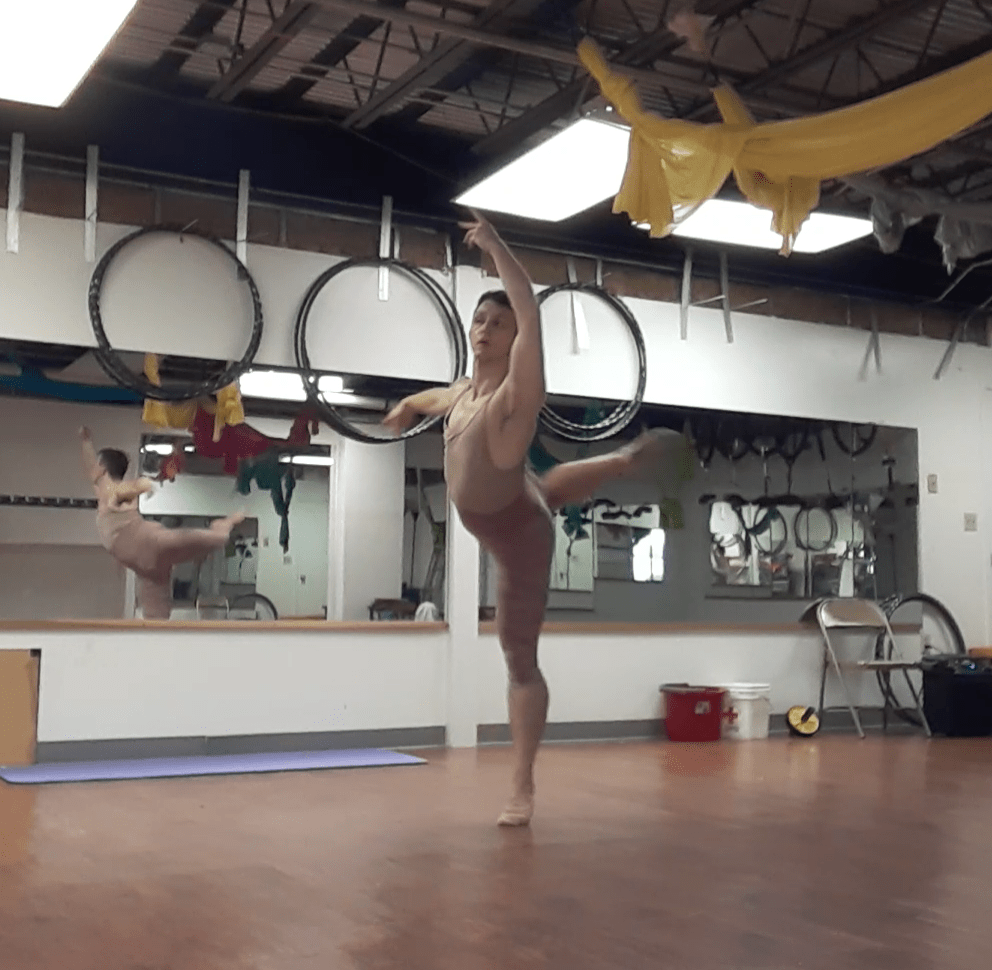
And then I realized, like—yeah. That will probably happen. And, to be honest, it’s okay.
I wish it was possible to guarantee that 100% of what I teach would both be absolutely sound and absorbed perfectly. But isn’t, and it never has been.
My own technique has its rough spots (I mean, I don’t call myself “danseur ignoble” for nothin’). My own teachers have probably passed along some quirks, and I certainly came up with plenty of them all by myself.
That’s fine. I don’t resent any of my teachers for the shortcomings I have now; instead, I appreciate how hard they tried to teach me correct, classical technique. I owe my career largely to my teachers’ sound methods, partly to the good graces of directors who have the ability to look beyond my quirks, partly to my ridiculously good feet (still, lol), partly to my own work ethic, and a little bit to raw talent.
People rock up to auditions with all kinds of flaws, because nobody’s perfect. Even if that wasn’t the case, different directors like different versions of things (like: I paused today to ask Mr D whether he wanted our waltz turns to brush through twice or to brush to the front and petit développé/pas de cheval to the back, because both versions are valid and I’ve been doing a lot of the second one lately).
Even students graduating from the best, longest-established schools aren’t perfect. That’s one of the things I love about ballet: no matter how good we are, we can always continue to strive for perfection. The fact that it’s unattainable is immaterial. The practice is the thing.
Likewise, there is no such thing as a perfect teacher. I will make mistakes. I will explain things with crazy analogies that may or may not take root. I will miss some things and overcorrect others.

In the end, I won’t be perfect, either as a dancer or as a teacher, but I suspect that my students will forgive me.
The important part is to teach, to the best of my ability, technique that is as strong and consistent as I can make it, and to continue learning both as a dancer and a teacher so that over time I can teach more effectively.
If I do that, I’ve done my part towards ensuring that most of the technique my students bring to the table will be strong and consistent, provided that the students also do their part, that the winds are favorable, and that, as they say, “the creek don’t riz.”
Because, y’all, I may be a somewhat teacher of regular ballet, but I’m wholly unqualified as an instructor of water ballet.

Something’s Happening!!!
You know those soundbytes that your brain makes from experiences in your own life and then plays back every time you hear some kind of trigger word or phrase?
“Something’s happening!!!” is one of mine. My friend Mal, who is one of the most amazing people I’ve ever known, once shouted this during a particularly complicated group acro thing, and it so beautifully summed up the moment: like, “Something is happening! Is it the right thing? WHO CARES!!! IT’S A RESULT!!! YEAHHHHHHHHH!!!”
If I remember correctly, what was happening was, in fact, the thing we were trying for, so that’s also awesome, but the best part was just the sheer excitement that ANYTHING was happening ^-^
Anyway, it was just one of those really great moments.
As is this.
Yes, COVID-19 is still a thing. We’re still dancing in masks in most circumstances and so forth. People are still getting sick and dying, and I don’t want to make light of that.
But, at the same time, the world of the performing arts and of the movement arts is slowly, cautiously resuming operations.
This week, I’m taking the Louisville Ballet School’s second-annual Adult Summer Intensive. Thus far, it’s been flat-out amazing. I’ve hella missed starting my day with class in a room full of dancers, then spending the whole day at work in the studio. It’s so good to be doing it now, and it’s a great group this year–14 of us doing the full-day program, plus an additional handful doing the half-day version.
Next week, on the 11th, I’m teaching a workshop for aerialists (and other movement-based performers who might not have a strong dance background) specifically on What To Do With Your Hands. Honestly, given my history as a Ballet Squid, I’m both deeply moved that people actually asked me to teach that specific topic and also deeply amused. Honestly, though, the fact that hands have historically been a biiiiiit of a problem for me is one of the reasons I actually feel qualified to teach this.
I am not, for example, all that well well placed to teach flexibility, because my entire approach would be, “IDK LOL MY BODY JUST DOES THAT *shrug*”
But since I’ve actually had to work at making my hands not do stupid and ridiculous things ALL THE TIME, I think I can actually offer some useful insights–like, “your hands will be more graceful if you think of them as extensions of your arms,” for example.
On the 13th, our preview production of Leigh Purtill Ballet Company’s CIRCUS OF WORLDLY WONDERS goes live (or semi-live). The show will have both pre-recorded and live segments, and there will also be a raffle and other cool fundraising stuff.
On the 17th, it’s PLAYTHINK TIME!!! I’ll be teaching my usual workshop, Move And Be Moved, at 6:30 PM on Thursday and performing an original piece with my friend Emma in the main-stage Flowcase, which begins at 8:30 PM on Friday.

Emma has, by the way, been a fabulous partner. She came into this with no real partnering experience, but has been incredibly game about trying everything. We also take regular breaks to act like a couple of five-year olds, which is super important to the partnering relationship IMO.
In July and possibly August, I’ll be teaching at Summer Intensives, and beginning rehearsals for LPBC’s next show, Sweet Sorrow: A Zombie Ballet, in which I get to be a werewolf (AWOOOOOOOOOO!!!).
I also have a bunch of short gigs with Turners’ Smile Parade, which is an awesome sort of pop-up circusette that visits nursing homes, schools, birthday parties, and so forth, and I’m hecking excited about those, because frankly they’re SUPER fun ❤
I may or may not find a way to jam another SI into my summer, though who knows? Right now, I’m feeling pretty booked, and like perhaps I shouldn’t add anything because I need to leave room to, like, actually breathe and relax and put my feet up before I dive into what is somehow the THIRD YEAR of my ballet-teaching career and the … fourth? year of my ballet career.
Tonight, though, I’ll be sliding into the bathtub for a little R&R before I crawl into bed. My body feels great (if a bit tired) right now, but 6ish hours of dancing, followed by an hour pushing the lawn mower around, can take a toll, and a bath will help put things right.

An Obvious, Not-Obvious Thing
I think I was 20 or so when I first thought to myself, “The first step in growing up is realizing that you’re still a kid” or something like that.
Even at the time, that seemed very obviously like a Step Zero kind of idea: like, not even Step One in the actual program of working on the thing, but the step that makes you realize there’s a thing to maybe work on in the first place[1].
- … Though, in fact, I’m not at all enamoured with the idea of growing up for its own sake, and never have been. More on that later, ! maybe?
At the time I was still rather blindly invested in the idea of myself as being mature-beyond-my-years. That was a problem because, in fact, I wasn’t so much preternaturally mature as developmentally delayed in a way that completely hoses up the cultural signals of maturity.

Like: it’s hard to get in trouble by doing stupid things with your friends when you don’t have any friends. Not getting in trouble can make it seem like you’re making good choices, when in fact you just haven’t had to make those choices in the first place.
It’s easy to follow the rules when you’re developmentally still at a stage in which you actually really like rules. This can make it seem like you’re a mature and prudent individual with clear foresight when, once again, you might not actually be equipped to make prudent decisions or be at all good at figuring out how your immediate actions might impact your long-term outcomes.
It’s easy to sound like an old soul when you basically learned how humans talk by reading books written by people who died a hundred years ago (and let’s not forget the social weirdness of growing up in the ur-nerdy, monomaniacal worlds of ballet and classical music, in which children tend to behave almost as if they come from another time, because the culture of the artform selects for a kind of old-world obedience). None of those things mean you have any idea how to have adult relationships.
Anyway!
When an actual 8- or 10-year old comes across that way, we assume that—appearances notwithstanding—they’re still not yet in a place, developmentally, that qualifies them to march forth into the adult world and, like, provide for themselves, navigate complex adult relationships, and … all that stuff.
When someone who’s 18 or 20 comes across that way, it’s easy to lose sight of the fact that Things Aren’t Always As They Appear. Instead, we congratulate them for their apparent maturity and are then flabbergasted when they make a disastrous hash of actually Adulting.
This can be just as true when the person in question is yourself. It can be hard to see our own deficiencies. We are, by nature, standing too close, so to speak.
Which brings me to The Obvious, Not-Obvious Thing.
I have spent a huge chunk of my life trying to prove that I could Live A Normal Life Despite My Differences/Disabilities, without understanding that simply acting as if they didn’t exist was, perhaps, not the best strategy. (Okay, full disclosure: I still do this on the regs. Long-established habits take time to change.)
As a result, I’ve basically lived a life in which I’m constantly angry at myself for the mentaphorical equivalent of failing to make it up the stairs in a wheelchair when there’s a ramp RIGHT HECKING THERE, for G-d’s sake[2]. Or, at least, there’s an easy enough way to add one.
- Caveat: there are, of course, still many, many situations in which there is neither a literal nor a metaphorical ramp. The fact that the culture at large behaves as if people with disabilities are failures in those situations is another post entirely, and one that lots of people have written better than I might. Likewise, deciding to climb the stairs in your wheelchair because you actually want to is a totally valid pursuit.
Anyway, lately (and belatedly, given that anyone who’s spent more than two minutes around Buddhism should hecking well know better, but there I go becoming attached to a concept again—specifically one about how I should or shouldn’t learn, which seems hilariously apropos), it has begun to occur to me to forgive myself, as it were, for being what I am.
Like … I might be able, with immense effort, to change some of these things to some extent—but why do that when there are other ways to reach the same goals? And why be mad at myself when I struggle? It’s not like being mad actually helps (in this circumstance).
In other words, it has begun to occur to me that instead of continuing to ram my metaphorical wheelchair into the stairs and be angry at myself for failing to climb, I can accept the metaphorical wheelchair situation and, like, add metaphorical ramps instead. (This seems relevant to this year’s intention, “Ask for help.”)
It has begun to occur to me that instead of fighting to change some of the limitations (for lack of a better word) that my brain imposes, I can accept that they’re there and figure out how to work with them—to harness them where it’s possible and to accommodate them where it’s not.
I guess I used to assume (albeit unconsciously) that I would “grow out of” things—that one day I’d learn how to do things the “normal” way (which is difficult enough for “normal” people, come to think of it) and … that would be that, I guess?
It’s not an unreasonable hypothesis—after all, at one point, I didn’t know how to tie my shoes, and then I figured it out and now it’s automatic.

It is, however, an incomplete hypothesis, or maybe a complete one that I’ve overgeneralized. (Teaching has been helpful, I think: it’s made the idea of different people having different strengths and weaknesses real to me in a way that it wasn’t before.)
In the past, for example, whenever I figured out a way to actually get myself to sleep in an almost-normal pattern, I I would simultaneously feel pleased with myself (This is it! I’m finally doing it!) and incredibly anxious (But what if something happens and I can’t sustain it?). I would cling white-knuckled to the System I’d devised. Then I’d be terribly disappointed when, inevitably, something interrupted the System and my brain happily reverted to its night-owl default because, yooooo, chronotypes are a thing.
I felt this way despite understanding that last point (chronotypes are a thing, though they tend to wander a bit over the course of our lives and we can force ourselves, with effort and routine, to live contrarily to them).

It takes several weeks to condition myself to sleep on a different cycle than the one my brain wants, but only about two nights off-pattern to reset back to square one. This is frustrating, obviously—but it doesn’t have to feel like a disaster.
I can remind myself that stressing out about it only makes things harder, and that while more than a few nights in a row of sleep deprivation can have dangerous consequences for my mental health, I now know how to combine a handful of tools (strict sleep hygiene, medication, and sheer physical exhaustion) to make myself sleep. Ideally, I should actually apply them before sleep-deprivation-induced mania takes hold, but even if it reaches that point, I now have the safety nets in place to prevent actual disaster.
In short, I’ve learned to tell myself, “It’s going to be okay” and believe it.
And though I’ve been reading and hearing about it for years, only recently did I develop the ability to apply a measure of radical acceptance. Like, how hard can it be to say, “Ah! I’ve managed to get to sleep by 1 AM and wake up by 9 AM for three days running. That’s convenient,” without feeling like THIS IS IT! I’M FINALLY DOING IT! or freaking out when, inevitably, I don’t get to sleep until 4 AM at some point?
Really hard, apparently.
But I’m learning to both say and feel, “It was handy to be awake by 9 AM and well-rested for a few days, but it’s no big deal that it didn’t work out today.” (Admittedly, it would be harder to do that if the company weren’t on hiatus. But we are, so I might as well work on developing this skill while sleep-scheduling demands are still on easy mode.)
I can also be fine with understanding, for example, that I’m not good at the kind of abstract planning that Adulting requires, or at managing money (or literally anything else) unless I keep things very simple, or at making phone calls (I joke about this all the time, but I also spend a lot of time being annoyed with myself about it). And being fine with understanding those things could help a lot.
Like, it turns out that when you stop being mad at yourself, it actually really is easier to start looking for ways to approach problems and get stuff done, just like everybody has been saying since forever.

So, basically, my current hypothesis is this:
Why not accept that what I am and where I am right now and begin working on building ramps so I can live without constantly feeling like I’m fighting an uphill battle?
I’ve also only just kind of realized that “accepting what I am right now” is different than “clinging to an idea of What I Am.” The first option leaves room for change and, frankly, for just being wrong. I might not actually understand all that well “what I am right now,” but if I accept that I can try different strategies until I find one that works, then it doesn’t really matter that much anyway.
If I can fail without getting angry at myself—that is, without judging myself—it’s not actually that hard to try again, or try something else, or to allow myself to rest before trying something else, or, you know, whatever.
And maybe I can even learn that it’s okay to fail. We can’t all be great at everything, and the world would be boring (and I wouldn’t have a job as a dancer, probably) if we were.


 danseur ignoble